Elderberry
The elder tree (Sambucus nigra) is one of the most generous plants of the Northern Hemisphere, offering flowers in early summer and deep purple berries in early autumn. Found along canals, abandoned lots, railway paths, woodland edges, and even tucked behind terraced houses, elder is one of the easiest wild foods to gather around Manchester.
Below is everything you need to know: how to identify it, when to harvest, traditional uses, and a set of simple recipes you can make at home.
How to Identify Elderberry
Tree / Shrub Size:
A small tree or large shrub, usually between 2–6 metres tall.
Leaves:
Opposite pairs, each leaf divided into 5–7 leaflets. Slightly serrated edges.
Flowers:
Flat white or pale cream clusters (called umbels) in June–July, with a sweet scent.
Berries:
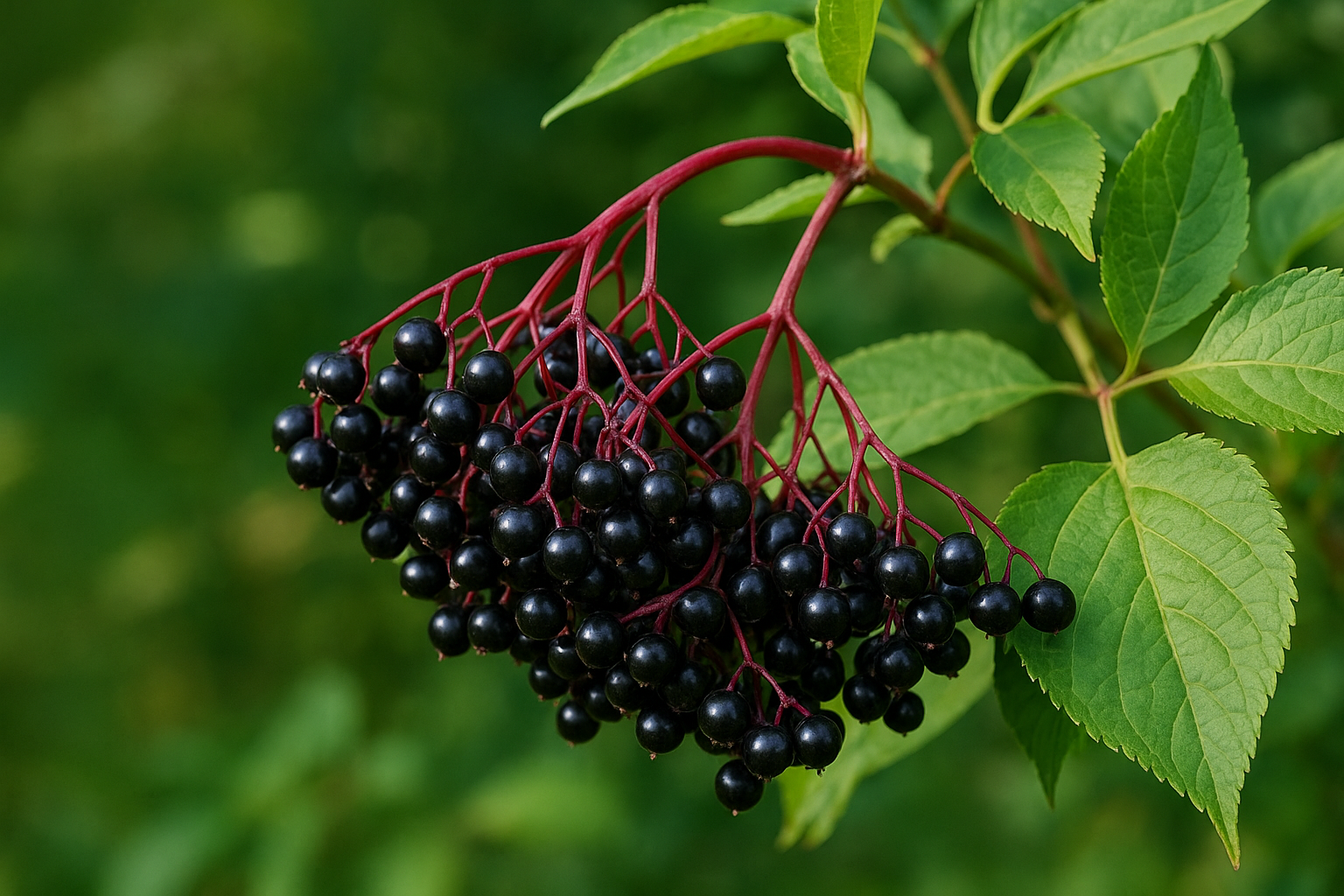
Deep purple to almost black when ripe. Grow in drooping clusters from late August through September.
Bark & Branches:
Greyish bark; younger stems are green and slightly soft. When broken, the stems reveal a pale pith inside.
Important:
Raw elderberries, seeds, stems, and unripe fruits can cause stomach upset. Always cook the berries before eating.
Where Elderberry Grows in Manchester
You’ll find elder everywhere the city relaxes into the wild:
- Along the Bridgewater Canal and Ashton Canal
- At the edges of Heaton Park, Chorlton Ees, Fletcher Moss, and Philips Park
- In forgotten corners along railway lines and industrial estates
- Behind older brick houses and in waste ground where birds have seeded them
If you spot it once, you’ll start seeing it everywhere.
A Little Folklore
The elder tree has a long association with protection and healing in British and Northern European tradition. In old lore, the tree was believed to house a spirit — sometimes called the “Elder Mother.” Cutting an elder without permission was thought to bring bad luck.
The flowers and berries were household medicine for centuries, used in winter months for warmth, resilience, and general wellbeing.
Traditional Uses
Elderflowers (summer):
Used for sparkling drinks, teas, cordials, and perfumes.
Elderberries (autumn):
Cooked into syrups, jams, vinegars, wines, and tonics.
Herbal history:
Elderberries have been used traditionally to support the immune system, soothe winter colds, and warm the body. Modern herbalists still use elderberry syrup as a seasonal tonic, though it should not be taken as medical advice or treatment.
Recipes
Below are simple, reliable recipes using wild elderberries. All quantities are small-batch and easy to scale.
1. Elderberry Syrup (Traditional Winter Tonic)
Ingredients:
- 500g elderberries (stripped from stems)
- 500ml water
- 250g honey (or sugar)
- Optional: a few slices of fresh ginger, 1 cinnamon stick, 2 cloves, or lemon peel
Method:
- Rinse the berries and place them in a saucepan with the water.
- Bring to a gentle simmer for 20–25 minutes, mashing the berries lightly.
- Strain through a fine sieve or muslin.
- Stir in the honey while the liquid is warm.
- Bottle and keep in the fridge for up to 2–3 months.
Usage:
Take a spoonful in winter, drizzle over porridge, or mix with hot water for a warming drink.
2. Elderberry Jam
Ingredients:
- 1kg elderberries
- 1kg sugar
- Juice of 1 lemon
Method:
- Remove berries from stems and simmer until soft.
- Add sugar and lemon juice.
- Boil for 10–12 minutes or until the jam sets.
- Pour hot into sterilised jars.
Great with toast, cheese, or spread thinly on warm scones.
3. Elderberry & Apple Crumble
Ingredients:
- 300g elderberries
- 3 medium apples, chopped
- 2 tbsp sugar (for fruit)
- Crumble topping: 100g flour, 60g butter, 60g sugar
Method:
- Mix apples, berries, and sugar in a baking dish.
- Rub butter into flour and sugar to make the crumble.
- Scatter the topping over the fruit.
- Bake at 180°C for 25–30 minutes.
A perfect late-summer dessert that uses both hedgerow and orchard.
4. Elderberry Vinegar (Great for Dressings)
Ingredients:
- A jar of elderberries
- Enough apple cider vinegar to cover
- 1 tbsp honey per 250ml (optional)
Method:
- Fill a jar halfway with berries.
- Cover with apple cider vinegar.
- Leave for 2–3 weeks, shaking occasionally.
- Strain and sweeten if desired.
This adds a deep, fruity acidity to salads, marinades, and roasted vegetables.
5. Elderberry Wine (The Hedgerow Classic)
Ingredients:
- 1.5kg elderberries
- 1.25kg sugar
- Juice of 1 lemon
- Wine yeast (any red wine yeast or general-purpose yeast)
- 4 litres water
Method (simple version):
- Simmer berries in water for 20 minutes.
- Cool slightly, add sugar, and stir to dissolve.
- Add lemon juice and yeast.
- Transfer to a demijohn with an airlock.
- Ferment 4–6 weeks, then rack, bottle, and age.
Produces a dark, rich wine with surprising depth.
Safety Notes
- Never eat raw elderberries or unripe berries — they must be cooked.
- Avoid stems and leaves, which contain compounds that can cause digestive upset.
- If you’re pregnant, on medication, or have health concerns, check with a professional before using elder therapeutically.
- Always forage safely: avoid polluted areas and wash all wild foods.
Final Thoughts
Elderberry season is one of the highlights of Manchester’s wild year. The plant gives generously — flowers in summer, berries in autumn, and centuries of history behind it. Whether you turn your haul into syrup, jam, or a Sunday crumble, elder is a reminder that the city is full of hidden harvests waiting to be rediscovered.