If Manchester ever chose a city plant, it wouldn’t be a fancy rose or some temperamental exotic.
It would be the dandelion — bold, scrappy, unbothered by traffic fumes, and more resilient than a Piccadilly pigeon.
You’ll find it holding court in the cracks of Deansgate, glowing like tiny suns on the edges of Hulme’s community gardens, and confidently waving at passing buses along Oxford Road. It thrives where everything else just shrugs and gives up.
And today, you’re going to meet this plant properly — not as a “weed,” but as one of Manchester’s most useful, edible, ecological allies.
1. Scientific Name (so it feels fancy for a moment)
Taraxacum officinale
Roll it around your tongue like you’re ordering something expensive. You’re not — but that’s the magic.
2. Family
The dandelion belongs to the Asteraceae family — the same outfit that includes daisies, burdock, and various plants your neighbour has mistaken for “lawn criminals.”
3. Botanical Description (The Anatomy of a Rebel)
The dandelion never grows politely.
- Leaves: Deeply toothed rosette, hugging the ground like it’s avoiding the rent.
- Stems: Smooth, hollow, latex-filled, and fiercely unbranching.
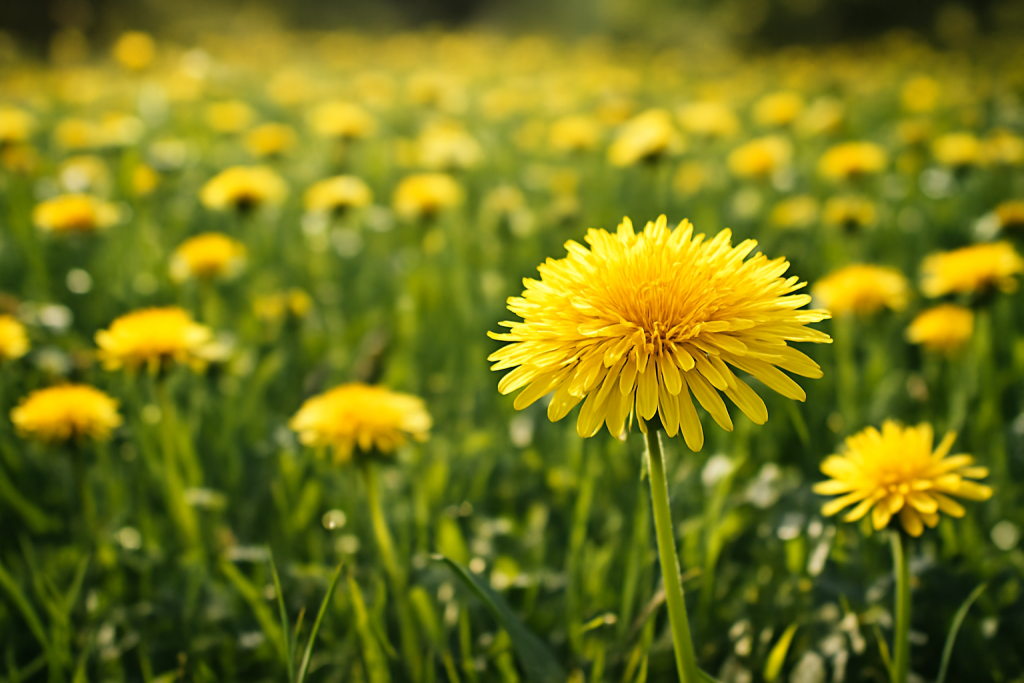
- Flowers: Bright yellow composite blooms that look like they’re permanently pleased with themselves.
- Seeds: The classic “wish clocks” — nature’s most democratic seed distribution system.
- Root: A taproot so determined that if the plant had a motto, it would be “not today, human.”
4. Photo Identification (Spotting the Real Deal)
You’ll know it’s a true Manchester dandelion if:
- It has one flower per stem
- The stem is hollow
- The leaves form a ground-hugging rosette
- It produces that fluffy seed globe kids can’t walk past without blowing
If the stem branches or the leaves are shaggy? Congratulations — you’ve found an impostor. They’re everywhere.
5. Status
Common, abundant, and utterly unconcerned with your opinion of it.
Not protected. Not threatened. Not going anywhere.
6. Habitat and Distribution (Where to Spot Them in Manchester)
Anywhere the city cracks, the dandelion says, “Cheers, I’ll take it from here.”
- Pavements in Ancoats
- Abandoned corners in Salford
- Heaton Park meadows
- School fields in Chorlton
- Gravel patches beside Metrolink stops
If you can stand on it, the dandelion has probably already tried to grow there.
7. Entomology (Insects Love It More Than Gardeners Do)
Bees, hoverflies, beetles — they all flock to the dandelion like it’s serving 2-for-1 cocktails in February.
Dandelions bloom early, making them vital for Manchester’s pollinators when nothing else has woken up yet.
8. Parts Used for Food (No, Seriously — You Can Eat This Thing)
- Leaves (best young)
- Flowers
- Buds
- Roots
- Even the taproot’s bitterness has culinary swagger
Almost every part is edible — the plant basically comes with an “eat me” label for those in the know.
9. Harvest Time (Your Dandelion Calendar)
- Leaves: Early spring before the plant gets sassy (bitter)
- Flowers: April onwards
- Buds: Mid-spring
- Roots: Best in autumn and early winter
10. Food Uses (How to Turn Manchester’s Toughest Plant Into Dinner)
People have turned dandelions into all sorts of things:
- Spring salads
- Sautéed greens
- “Capers” made from the buds
- Petal syrups that taste like sunshine
- Fritters
- Wine
- And the famous roasted root “coffee” — a caffeine-free hug in mug form
11. Nutritional Profile (Stronger Than It Looks)
The dandelion is loaded with:
- Vitamins A, C, K
- Iron
- Calcium
- Magnesium
- Antioxidants
- Gut-friendly inulin (in the roots)
This plant has no business being this nutritious for something that grows next to bins.
12. Recipes (Simple, Wild, Manchester-Friendly)
Dandelion Flower Fritters
Dip the flowers in a light batter, fry until golden, sprinkle with salt.
Eat them quick — they disappear like chips in a student flat.
Dandelion Leaf Pesto
Blend young leaves with olive oil, garlic, nuts and lemon.
It tastes like spring trying to wake you up.
Roasted Dandelion Root Brew
Roast chopped roots until dark and aromatic.
Grind, brew, sip.
Feel quietly smug.
13. Herbal Medicine Uses (Traditional, Not Medical Advice)
Long used for:
- Digestion
- Liver support
- Gentle detox
- Fluid balance
- Appetite stimulation
It’s the sort of plant your great-grandparents would have sworn by.
14. Other Uses (The Bonus Round)
- Yellow dye from petals
- Potential natural rubber from the latex
- Soil aeration from the taproot
- A reliable way to annoy people who want perfect lawns
15. Safety Note
Dandelions are very safe, but:
- Latex can irritate sensitive skin
- Allergies are possible if you’re sensitive to daisies/ragweed
- Avoid roadside or sprayed areas
- The plant is mildly diuretic
- Don’t forage from dog hotspots unless you enjoy chaos
Final Thought: The Plant That Won’t Behave
The dandelion is Manchester’s anarchist plant — bright, stubborn, and happiest in the places humans forget about.
It’s food, medicine, ecology, colour, resilience, humour, and wildness all in one scrappy yellow flower.