Burdock, particularly the Lesser Burdock (Arctium minus), is a powerhouse of a plant often overlooked across the British Isles. Famed for its hooked burrs that inspired Velcro, it’s the long, earthy taproot that holds the true value. From being the key flavour in the retro British soft drink, Dandelion and Burdock, to its celebrated use in traditional herbalism and Japanese cuisine (Gobo), this plant is a wild-food treasure.
If you’re looking to explore the benefits of wild food and medicine, Burdock is a fantastic place to start—and it’s readily available in the green spaces of Greater Manchester.
🔎 Section 1: Identification & Timing for Foraging Success
Burdock is a large, imposing biennial plant, meaning it lives for two years. Knowing its stage is critical, as only the first-year root is tender enough for food and medicine.
| Growth Stage | Key Feature | Foraging Use |
| Year One (Prime Time) | A massive basal rosette of leaves close to the ground. Leaves are broad, heart-shaped, dark green above, and covered in a grey, downy felt underneath. No central flower stalk. | Harvest the taproot in the autumn/winter of this year for best quality. |
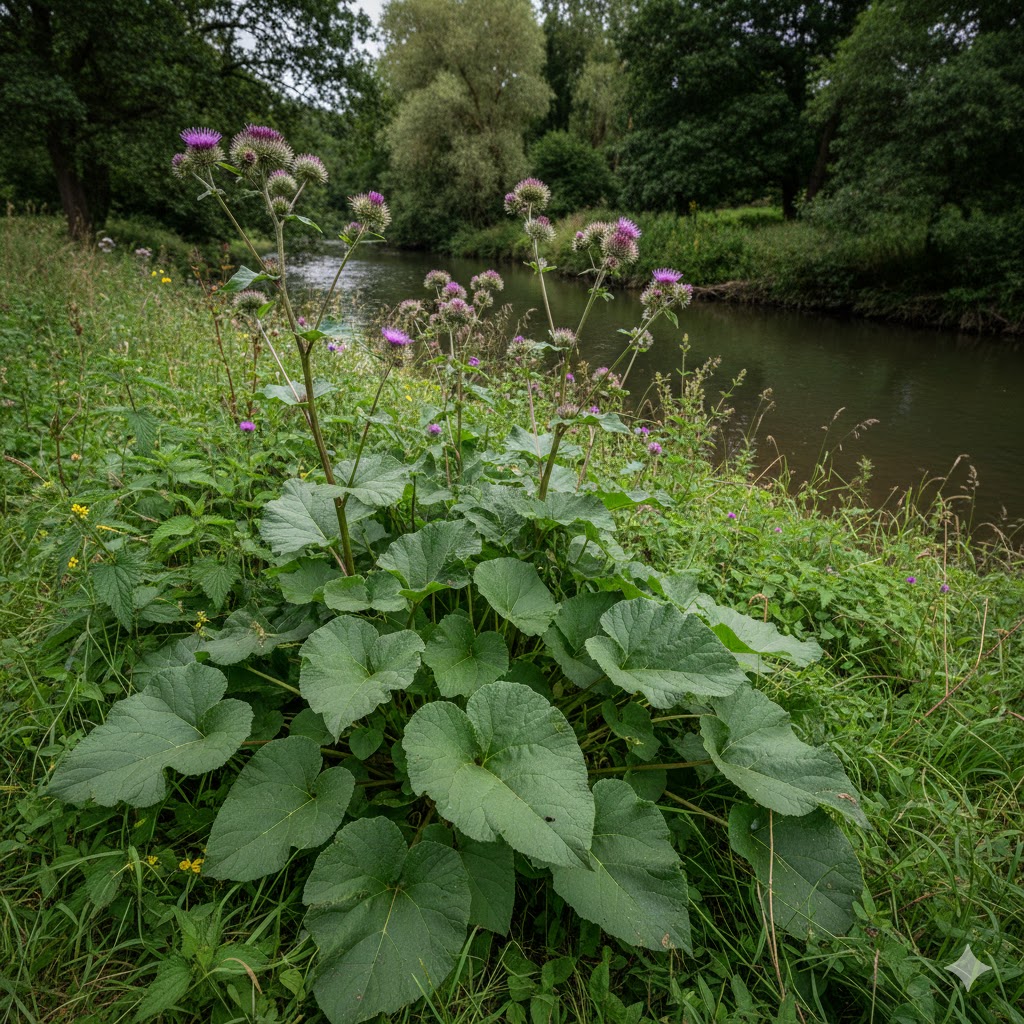
| Year Two (Too Late for Root) | A tall, stout, branched stem, often exceeding 1.5 metres, topped with thistle-like purple-pink flowers that turn into the famous burrs. | The root is woody and tough—avoid digging. You can harvest the peeled young stems. |
📍 Section 2: The Manchester Foraging Connection
Burdock loves disturbed, nitrogen-rich ground, and is a common sight across the North West.
Wythenshawe Park & Local Hotspots
Large Burdock rosettes are frequently spotted along the edges of footpaths and less maintained areas within large green spaces. While they can be found in many Manchester parks, look for them around the perimeter of playing fields and rougher boundaries in specific spots like Wythenshawe Park.
Burdock also thrives along the edges of the River Mersey and the region’s many canal banks, wherever soil has been disturbed or allowed to go wild.
Ethical Foraging Reminder (UK Law) 🇬🇧
In the UK, while picking leaves or flowers is generally permitted, you must have the landowner’s permission to dig up any plant root. Always forage responsibly, take only what you need, and ensure your site is clean, avoiding heavily polluted roadside verges.
💊 Section 3: The Healing Root: Traditional Health & Benefits
In traditional herbalism, Burdock is famed as an alterative or “blood purifier,” used to support the body’s natural cleansing mechanisms.
Key Traditional Uses
- Skin Health: Its most celebrated use is for inflammatory skin conditions like acne, eczema, and psoriasis. It is believed to support the liver and provide anti-inflammatory action, which can lead to clearer skin.
- Digestion and Gut Health: Burdock root is rich in inulin, a prebiotic fibre that feeds beneficial gut bacteria, aiding digestion and promoting a healthy gut biome.
- Liver Support: Traditionally used to stimulate bile flow, making it a popular gentle tonic for liver function.
⚠️ Important Safety Notice
Always consult a healthcare professional before using Burdock for medicinal purposes, especially if you are pregnant, breastfeeding, or taking medication. Burdock may interact with blood thinners, diuretics, and diabetes medications.
🍵 Section 4: Culinary & Medicinal Preparations
The versatile root can be used as a vegetable, a strong medicinal tea, or a concentrated tincture.
Simple Burdock Decoction (Strong Tea)
A decoction involves simmering the hard root to fully extract its medicinal compounds.
- Ingredients: 2 Tbsp of fresh or dried, chopped Burdock Root per 2 cups of water.
- Method: Place root and water in a pot. Bring to a boil, reduce heat, cover, and simmer for 15 minutes. Strain and drink warm.
- Optional: Sweeten the earthy flavour with a little honey or maple syrup.
Video Guide: For a visual guide on processing the root and making the decoction, you can watch this helpful video: How to Process Burdock Root and How to Make Burdock Decoction/Tea
Traditional Burdock Tincture
A long-lasting concentrated medicinal extract:
- Wash and chop fresh root.
- Place in a jar and cover with high-proof alcohol (e.g., 45% ABV Vodka).
- Store in a cool, dark place for 4–6 weeks, shaking daily.
- Strain and bottle for use as a supplement (typically small doses diluted in water).
Savoury Food Prep (Kimpira Gobo)
Burdock root is a delicious, dense vegetable known as Gobo in Japan.
- Preparation: Peel and slice the root into fine matchsticks. Soak them in acidulated water (water with vinegar) to reduce earthiness.
- Cooking: Stir-fry the root with sliced carrots, then season with soy sauce, a touch of sugar, and sesame oil for a simple, earthy vegetable side dish.
🌿 Section 5: Complementary Herbal Allies
Burdock is often combined with other “alterative” herbs to enhance its effect, particularly when addressing chronic skin or digestive issues. Look out for these allies on your next Manchester foraging walk:
- Dandelion Root (Taraxacum officinale): A fellow alterative and bitter tonic that supports the liver.
- Yellow Dock Root (Rumex crispus): Highly effective at stimulating bile and supporting liver function.
- Red Clover (Trifolium pratense): Used traditionally to assist the lymphatic system and for skin complaints.
- Cleavers (Galium aparine): Known for its lymphatic and diuretic properties, helping the body to process and eliminate waste more effectively.
Ready to put your foraging knowledge to the test? Would you like me to find a recipe for a traditional Dandelion and Burdock drink using fresh foraged roots?