Sphagnum Moss, often called Bog Moss or Peat Moss, is one of Britain’s most remarkable yet overlooked plants. This humble inhabitant of our wetlands holds an extraordinary place in history—saving countless lives during both World Wars—and continues to offer valuable properties for survival, medicine, and horticulture today.
From its incredible absorbency (holding up to 20 times its weight in liquid) to its natural antiseptic qualities, Sphagnum moss is a wild resource worth understanding. For those exploring the Peak District moorlands or Manchester’s surrounding wetlands, this unassuming plant is a testament to nature’s ingenuity.
If you’re interested in wild medicinal plants, survival skills, or simply connecting with the landscape’s hidden stories, Sphagnum moss is an essential study—and it grows closer than you might think.
🔎 Section 1: Identification & Where to Find It
Sphagnum is not a single species but a genus containing over 380 species worldwide, with around 34 found in the UK. While specific identification can be complex, the general characteristics are distinctive enough for foragers and naturalists.
Key Identification Features
| Feature | Description |
|---|---|
| Appearance | Soft, spongy cushions or carpets of moss in shades of green, yellow-green, red, or brown depending on species and water content. |
| Texture | When dry: crispy and brittle. When wet: incredibly soft and spongy, like a natural sponge. |
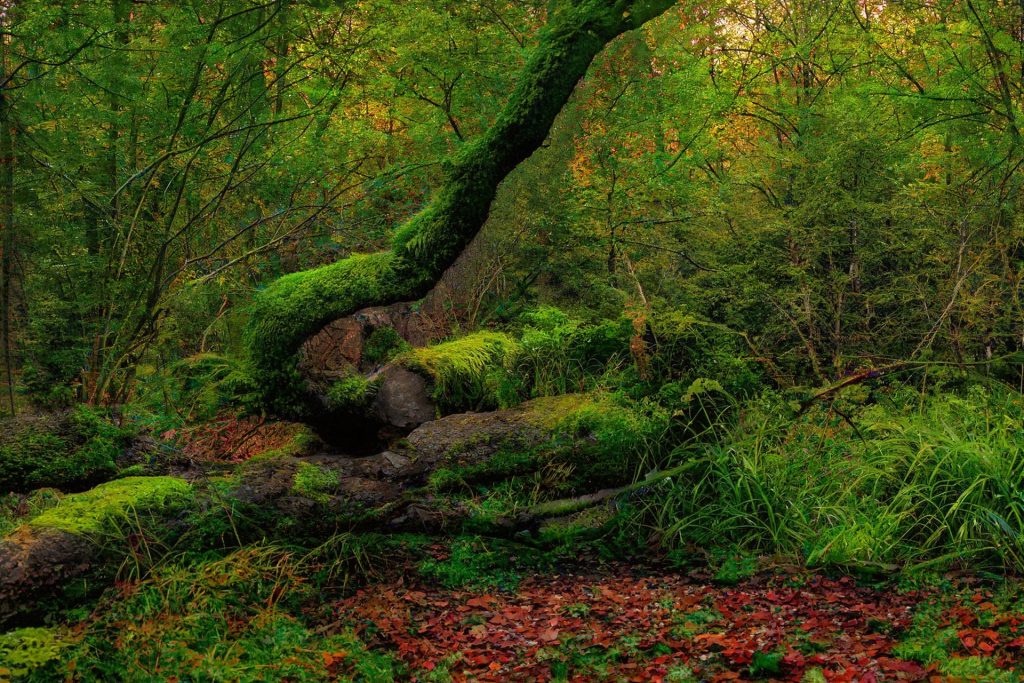
| Habitat | Bogs, fens, wetlands, damp moorlands, and acidic pools. Thrives in waterlogged, low-nutrient environments. |
| Structure | No true roots—absorbs water and nutrients directly through its leaves. Grows in dense mats that can be several feet deep. |
| Colour Change | Living Sphagnum ranges from bright green to golden or reddish. Dead material turns brown and forms peat over centuries. |
Growth Habit
Sphagnum grows continuously from the top while the lower sections die and compress into peat. This process has been happening for thousands of years, creating the deep peat bogs of Britain.

📍 Section 2: The Manchester & Peak District Connection
While you won’t find extensive Sphagnum in urban Manchester itself, the surrounding areas offer excellent opportunities for observation and ethical collection.
Peak District Moorlands
The Dark Peak moorlands, easily accessible from Manchester, are home to vast blanket bogs dominated by Sphagnum species. These protected habitats are some of the most important peatlands in England.
Key locations:
- Bleaklow – High-altitude blanket bogs with extensive Sphagnum coverage
- Kinder Scout – Moorland plateaus with wet areas supporting Sphagnum
- Snake Pass area – Roadside wetlands and bog habitats
- Longdendale – Reservoir edges and upland bogs
Closer to Manchester
- Salford Quays Wetlands – Small pockets in managed wetland areas
- Chat Moss (historically) – Once a vast peat bog, now largely drained but remnant areas exist
- Hollingworth Lake area – Surrounding wetlands may support small patches
Ethical Collection & UK Law 🇬🇧
Important: Most Sphagnum habitats are protected sites (SSSIs – Sites of Special Scientific Interest). Never harvest from these areas.
Sphagnum collection without permission is illegal on protected land and ecologically harmful. Peat bogs are critical carbon stores and biodiversity hotspots.
For educational or survival practice, only collect small amounts from:
- Private land with explicit landowner permission
- Non-protected wetlands where Sphagnum is abundant
- Never take more than a handful from any single location
For medicinal or horticultural use, purchase sustainably harvested dried Sphagnum moss instead.
💊 Section 3: The Wartime Miracle: Historical Medicinal Use
Sphagnum moss’s place in history is nothing short of extraordinary. During WWI and WWII, when cotton and medical supplies were scarce, Britain turned to its bogs for a life-saving solution.
Why Sphagnum Saved Lives
| Property | Medical Benefit | Comparison to Cotton |
|---|---|---|
| Absorbency | Holds up to 20x its weight in liquid—could absorb blood and discharge far more effectively | Cotton holds 4-6x its weight |
| Antiseptic | Contains sphagnan (natural antiseptic compound) that prevents infection | Cotton has no antiseptic properties |
| pH Level | Acidic environment (pH 3.5-4.5) inhibits bacterial growth | Cotton is neutral |
| Cooling Effect | Natural evaporation provided soothing relief to wounds | Cotton retains heat |
| Availability | Free, abundant in British wetlands | Expensive, required import during wartime |
The Collection Effort
Volunteers, including the Women’s Institute and schoolchildren, collected millions of Sphagnum moss dressings during WWI. The moss was:
- Collected from bogs across Scotland, Ireland, and northern England
- Cleaned and dried
- Packed into muslin bags or gauze
- Sterilized and sent to field hospitals
Estimated impact: Sphagnum dressings helped treat hundreds of thousands of wounded soldiers and significantly reduced infection rates compared to standard cotton bandages.
Post-War Decline
After WWII, mass-produced sterile dressings and antibiotics made Sphagnum moss obsolete in mainstream medicine. However, its properties remain valid and valuable for wilderness first aid.
🏕️ Section 4: Modern Survival & Bushcraft Applications
Beyond medicine, Sphagnum moss has multiple practical uses for outdoor enthusiasts and survivalists.
1. Emergency Wound Dressing
In a true wilderness emergency, fresh Sphagnum can be used as an improvised wound dressing:
Method:
- Collect fresh, living Sphagnum from clean water (avoid stagnant or polluted sources)
- Squeeze out excess water gently
- Apply directly to bleeding wound—the moss will absorb blood and provide mild antiseptic protection
- Replace with fresh moss as needed
- Seek proper medical attention as soon as possible
⚠️ This is for emergency survival situations only. Always carry a proper first aid kit.
2. Water Filtration (Pre-Treatment)
Sphagnum can act as a physical filter for large particles and sediment:
- Layer Sphagnum in a container or improvised filter
- Pour water through slowly
- Important: This does NOT purify water. You must still boil or chemically treat filtered water before drinking.
3. Fire-Starting & Signal Material
Dried Sphagnum:
- Burns slowly with thick, white smoke
- Excellent for signal fires in emergencies
- Can be used as tinder when completely dry (though it requires a hot spark)
4. Insulation Material
Historical use: Dried Sphagnum was used as insulation in boots and clothing by indigenous peoples and early explorers.
Modern application: Can be stuffed into clothing or sleeping bags in survival situations for additional insulation.
🌱 Section 5: Horticultural Uses
Sphagnum moss is widely used in gardening, though ethical sourcing is crucial.
Modern Garden Applications
| Use | Purpose |
|---|---|
| Orchid Growing | Provides ideal moisture retention and aeration for epiphytic orchids |
| Carnivorous Plants | Creates the acidic, low-nutrient conditions these plants require |
| Seed Starting | Retains moisture while preventing damping-off disease |
| Hanging Baskets | Used in moss-lined baskets for moisture retention |
| Terrariums | Maintains humidity and prevents soil compaction |
Sustainability Concern
Commercial peat and Sphagnum harvesting has devastated many global bog ecosystems. Always choose:
- Sustainably certified Sphagnum products
- Peat-free alternatives for general gardening
- New Zealand Sphagnum (grown in farmed conditions) over wild-harvested UK moss
🍵 Section 6: Processing & Preparation
Drying Sphagnum for Storage
If you have legally and ethically sourced fresh Sphagnum:
- Clean: Gently shake or rinse to remove debris and insects
- Spread: Lay out on mesh screens or newspaper in a well-ventilated area
- Dry: Allow to air dry completely (1-3 days depending on humidity)
- Store: Once crispy-dry, store in paper bags or breathable containers
- Label: Note collection date and location
Shelf life: Dried Sphagnum can be stored for years if kept dry.
Rehydrating for Use
- Place dried moss in a bowl
- Cover with clean water
- Allow to absorb for 5-10 minutes
- Gently squeeze out excess water before use
Making Sphagnum Extract (Experimental)
Some historical sources mention making a Sphagnum “tea” for topical wound wash:
Method:
- Steep clean, fresh Sphagnum in boiled water for 15-20 minutes
- Strain thoroughly
- Allow to cool
- Use as a topical wash only (do not drink)
⚠️ This is historical/experimental information only. Modern antiseptics are far more reliable and tested.
🌿 Section 7: Ecosystem Importance & Conservation
Sphagnum is far more than a useful plant—it’s a cornerstone species in some of Britain’s most important habitats.
Ecological Role
Carbon Storage: UK peatlands store more carbon than all the forests in Britain, France, and Germany combined. Sphagnum is the primary builder of this carbon bank.
Water Management: Sphagnum bogs act like giant sponges, regulating water flow and preventing flooding downstream.
Biodiversity: Rare species like the Large Heath butterfly, Golden Plover, and carnivorous Sundews depend on Sphagnum bog habitats.
Why Bogs Are Threatened
- Historical drainage for agriculture and development
- Peat extraction for horticulture and fuel
- Pollution from agricultural runoff and atmospheric deposition
- Climate change causing bogs to dry out
How to Help
- Never damage or harvest from protected bogs
- Use peat-free compost in your garden
- Support rewetting projects through organizations like Moors for the Future
- Visit responsibly – stick to paths in moorland areas
- Educate others about the importance of peatlands
📚 Section 8: Quick Reference Guide
At a Glance: Sphagnum Moss
| Aspect | Details |
|---|---|
| Latin Name | Sphagnum spp. (multiple species) |
| Common Names | Bog Moss, Peat Moss |
| Habitat | Bogs, fens, wet moorlands, acidic pools |
| Conservation Status | Protected in most UK locations (SSSIs) |
| Key Property | Absorbency: 15-20x its weight in water |
| Historical Use | WWI/WWII wound dressings |
| Modern Use | Horticulture, survival first aid, insulation |
| Sustainability | Never harvest from wild – buy certified sustainable |
🎓 Section 9: Further Learning & Resources
Recommended Reading
- “Sphagnum: The Biology of a Habitat Manipulator” by Håkan Rydin and John K. Jeglum
- Historical WWI medical records (Imperial War Museum archives)
- “Wetlands” by William J. Mitsch and James G. Gosselink
- Wild Manchester Medicinal Plants
Organizations to Support
- Moors for the Future Partnership – Restoring Peak District peatlands
- The Wildlife Trusts – Protecting wetland habitats across the UK
- RSPB – Managing important bog habitats for wildlife
Video Resources
For visual guides on identifying Sphagnum moss in the wild and understanding peatland ecosystems, search for:
- “UK Sphagnum Moss Identification”
- “Peatland Restoration Projects Peak District”
- “WWI Sphagnum Moss Wound Dressings”
🏔️ Section 10: A Manchester Forager’s Action Plan
If you’re based in or around Greater Manchester and want to learn more about Sphagnum moss:
Step 1: Observe (Don’t Collect)
Visit the Peak District moorlands and practice identifying Sphagnum in its natural habitat. Bring a field guide and camera.
Step 2: Learn the History
Visit the Imperial War Museum North (Salford Quays) to learn about WWI medical innovations, including Sphagnum dressings.
Step 3: Support Conservation
Join a volunteer day with Moors for the Future to help restore damaged peatlands. You’ll learn about Sphagnum ecology while making a real difference.
Step 4: Ethical Alternatives
Purchase sustainably sourced dried Sphagnum for any practical experiments or horticultural use.
Step 5: Share Knowledge
Teach others about this remarkable plant and the importance of protecting our remaining peatlands.
⚠️ Final Safety & Legal Disclaimer
Medical Disclaimer: The historical medicinal uses of Sphagnum moss described here are for educational purposes only. Always use modern medical supplies and seek professional medical attention for injuries. Never rely on wild plants as a substitute for proper medical care except in genuine survival emergencies.
Legal Notice: Collection of plants from protected sites (SSSIs, National Parks, Nature Reserves) is illegal without explicit permission. Most Sphagnum habitats in the UK are protected. This article is for educational purposes and does not encourage illegal collection.
Conservation Ethics: Peatlands are critically important ecosystems. Always prioritize their protection over personal collection. For practical use, purchase sustainably certified products.
🌍 Conclusion: Respect the Bog
Sphagnum moss is a living reminder that nature’s simplest organisms can hold extraordinary power. From saving lives on WWI battlefields to storing more carbon than any forest, this humble moss deserves our respect, protection, and gratitude.
The next time you walk across a Peak District moorland and see the spongy, vibrant carpets of Sphagnum beneath your feet, remember: you’re walking on thousands of years of slow growth, on a habitat that helps regulate our climate, and on a plant that once kept soldiers alive when modern medicine couldn’t.
Protect it. Learn from it. And let it continue its vital work.
Have you encountered Sphagnum moss on your Manchester-area adventures? Share your experiences and observations in the comments below. And if you’ve explored the historical connection between Sphagnum and wartime medicine, we’d love to hear your thoughts.